
Water-based lube is compatible with everything you own and washes off with water; silicone lube lasts several times longer and destroys silicone toys and rings on repeated contact. If you own silicone gear, that single sentence settles it.
Everything below is the detail behind that, plus the cases where silicone genuinely wins.
The comparison
| Water-based | Silicone-based | |
|---|---|---|
| Latex condom safe | Yes | Yes |
| Silicone toys and rings | Yes | No, degrades them |
| Longevity | Reapply as needed | Very long, one application |
| Use in water | Washes away | Excellent |
| Cleanup | Rinses with water | Needs soap |
| Fabric | Washes out | Can mark |
| Goes tacky | Yes, as water leaves | No |
| Reactivates with water | Yes | Not applicable |
| Typical irritation risk | Depends on the formula | Low, chemically inert |
Why water-based is the default
It is compatible with everything: latex, polyisoprene, polyurethane, silicone toys, silicone rings, and every material in a normal drawer. Nothing you own is at risk from it.
It also rinses off. That sounds trivial until you have used silicone lube on a night when you wanted the sheets clean afterwards.
The cost of that compatibility is longevity. Water-based lube absorbs into skin and evaporates into the air, and as it does the water leaves before the thickeners do, which is the sticky stage everyone complains about. Better formulations resist it for longer, and a few drops of water reactivates almost any of them. Adding more product on top of a tacky layer usually makes it worse.
Glycerin is the usual reason a cheap water-based lube goes tacky quickly and one of the reasons some people find it irritating. If you are sensitive, a glycerin-free, unscented formula is the first thing to try before concluding you are sensitive to lube in general.
Why silicone wins where it wins
It lasts. A single application carries most sessions without a top-up, because there is nothing in it to evaporate or absorb. That makes it the right choice for long sessions and for anything involving significant friction.
It works in water. A shower or a bath washes water-based lube away in seconds, and silicone stays put. There is no water-based equivalent.
It is also chemically inert and sits on the surface rather than interacting with tissue, which makes it a reasonable option for people who react to water-based formulations.
The costs are soap-only cleanup, marks on fabric, real slipperiness on hard floors, and the toy problem.
The silicone-on-silicone problem
Silicone lubricant and silicone products are chemically related, and repeated contact softens the toy’s surface. It starts as a slightly tacky feel, becomes gummy, and finishes with a surface that is porous and cannot be properly cleaned, at which point the item is finished, whatever it cost.
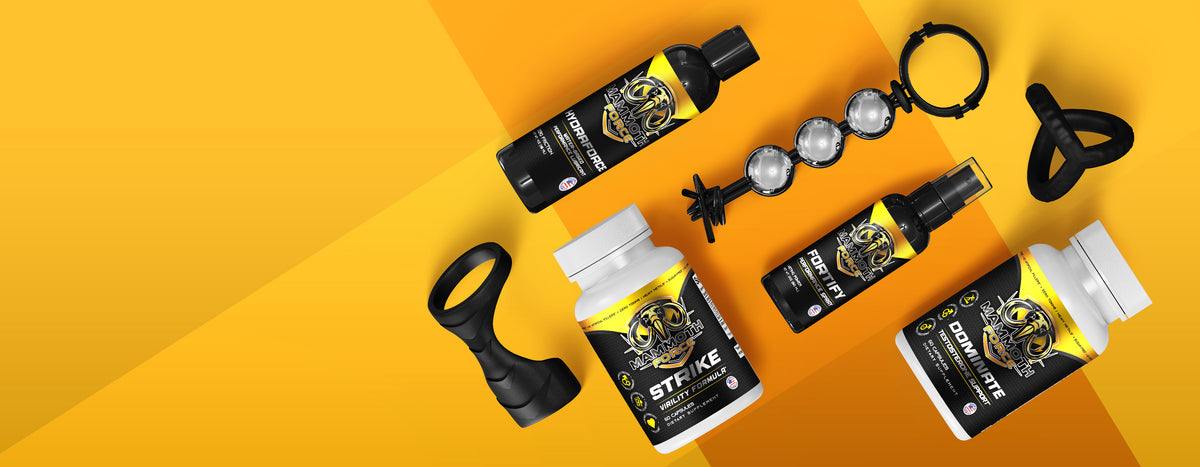
Every ring in the Mammoth Force lineup is silicone. So are most sleeves, including the Cyclone and Titan Trainer category. Water-based is the answer for all of them.
If you want to use silicone lube with a silicone item anyway, a condom over the item works as a barrier. The full mechanism and the workaround are in silicone lube with silicone toys .
Hybrids
Hybrid lubricants blend a water base with a small amount of silicone to get longer wear with easier cleanup. They work, and the feel is genuinely different, creamier and less draggy than water-based at the end of its life.
They usually inherit the silicone incompatibility, which is the thing people miss. If a hybrid contains dimethicone or any -cone ingredient, treat it as silicone where your toys are concerned. Read the panel.
Picking one
Start here:
- You own silicone rings, sleeves or toys. Water-based.
- Shower or bath. Silicone, and mind the floor.
- Long session, high friction, no silicone gear. Silicone.
- Sensitive skin or a history of irritation. Simple, unscented, glycerin-free water-based, or silicone.
- Condoms. Either. Never oil. See lube and condom compatibility .
- You want one bottle for everything. Water-based, without much argument.
Osmolality is the other thing worth knowing about, and it is where most irritation comes from rather than from the base itself. Body tissue sits around 280 to 300 mOsm/kg, and lubricants well above that draw water out of the cells they contact. The WHO has published guidance recommending lubricants stay within a defined range. Manufacturers rarely publish the figure. The lube guide covers it properly.

Mammoth Force
HydraForce Lubricant
4 oz water-based lube. Store says glycerin-free and silicone-safe.
4.6 from 15,000+ reviews
Free shipping over $50 • Discreet packaging • Ships from Huntington Beach, CA
HydraForce is the 4 oz lubricant in the lineup, formulated for low friction and everyday use. Check the ingredient panel on the product page for the current base and full formulation before buying if you have known sensitivities or if compatibility with a specific toy matters to you.
Cost per use
Water-based is cheaper per bottle and you use more of it, so the two bases end up closer than the shelf price suggests. Silicone runs roughly twice the price for the same volume and lasts several times longer in use, which makes it the cheaper option for long sessions and the more expensive one for a quick top-up.
Neither difference is large enough to decide anything. Compatibility should decide it, and compatibility points at water-based for most people who own silicone gear.
Using it with a ring
A small amount inside the ring and a small amount on the shaft, then roll it on. Repeat before removal.
That one habit removes most of the friction complaints people have about constriction rings, and it makes the 30-minute limit easier to respect, because taking the ring off stops being something to postpone. How to use a penis ring has the rest of the routine.
Reading the label
The base is not always where you would expect to find it, and the front of the bottle is not where to look.
A water-based lubricant lists water or aqua first. A silicone lubricant lists dimethicone, cyclomethicone, cyclopentasiloxane or dimethiconol, usually as the only substantial ingredients. A hybrid lists water first and a -cone further down, and it behaves like silicone as far as your toys are concerned.
The ingredients worth noticing after that are glycerin, which contributes to high osmolality and to the tacky stage, parabens, which are a common trigger for people with sensitive skin, and any warming, cooling or tingling agent, which usually produces the sensation by irritating tissue. Nonoxynol-9 is the one to avoid outright: it is a spermicide that damages epithelial tissue with repeated use.
Shorter lists are generally better here, and they are also easier to reason about when something has irritated you and you are trying to work out which product to blame.
What to read next
- Silicone lube with silicone toys
- Lube and condom compatibility
- Best lube for men
- The complete lube guide
- Personal lubricant